Redesigning Dell’s PowerEdge experience to help customers learn and explore.
Poweredge Servers
Overview
Role
Senior Product Designer
Timeline
2022-2024
Responsibilities
Discovery • Information Architecture • Wireframing • Design System Application • Stakeholder Alignment
Plaftorms
Web
The Opportunity
Dell PowerEdge Servers is one of Dell's core enterprise server product lines, and its website is a key sales and information channel for IT buyers evaluating server hardware.
I led the design project on a redesign of this site as part of Dell's broader shift toward new web technology, working within Dell's design team alongside engineering and copy, over roughly 2022–24.
The problem
The existing PowerEdge pages had accumulated years of content without a structural rethink: long, unbroken scrolls buried key product information, copy had gone stale, and the page struggled to communicate value clearly to customers evaluating servers.
At the same time, Dell was moving its web platform toward new technology, creating an opening to rebuild the page's architecture rather than patch the old one.
My role
I was part of Dell's design team but led the design direction for this specific redesign, from early concepts through final specs, coordinating with copywriters, engineers, and other designers contributing to different modules of the page and Dell's proprietary Design System (DDS).
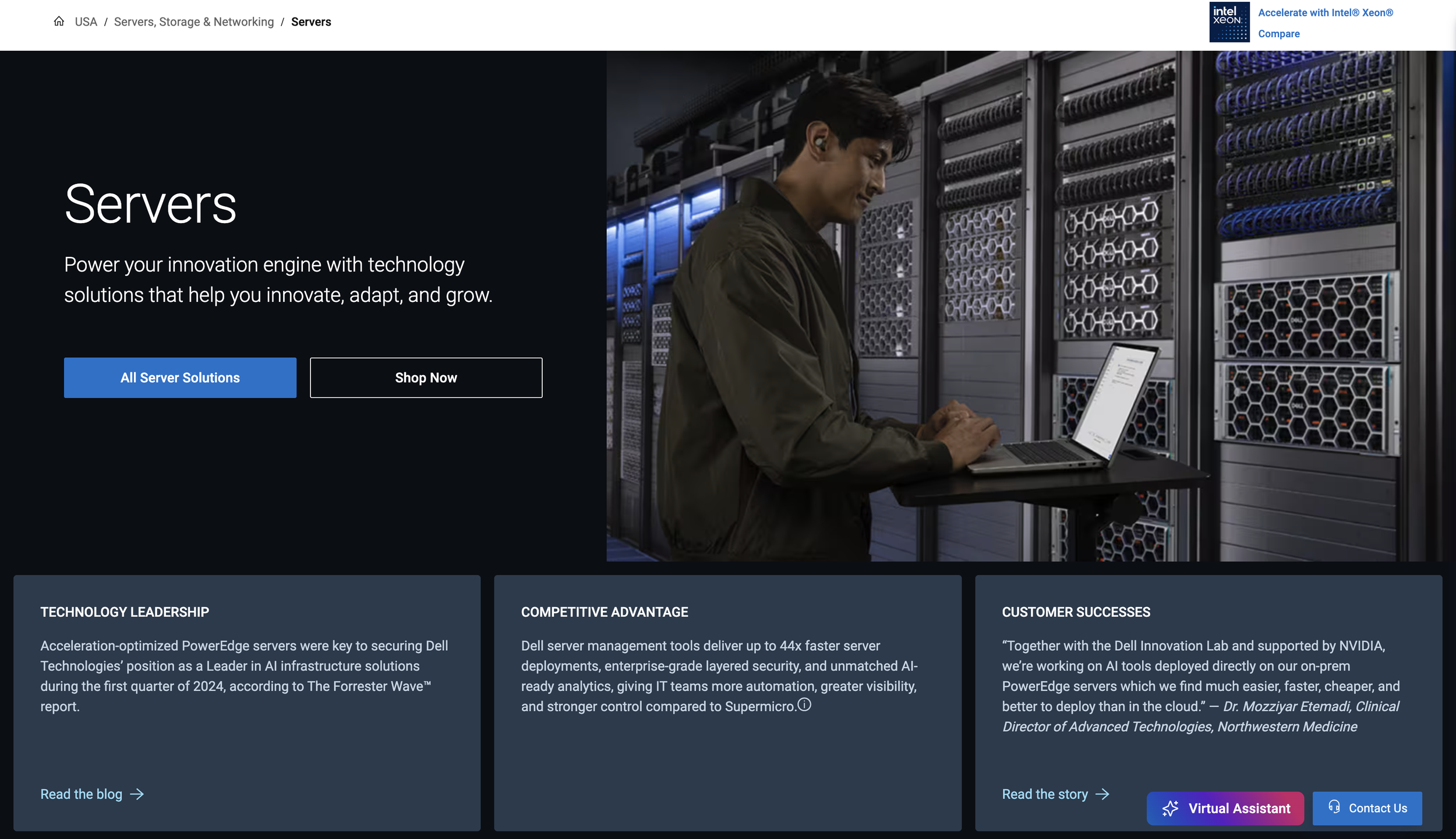
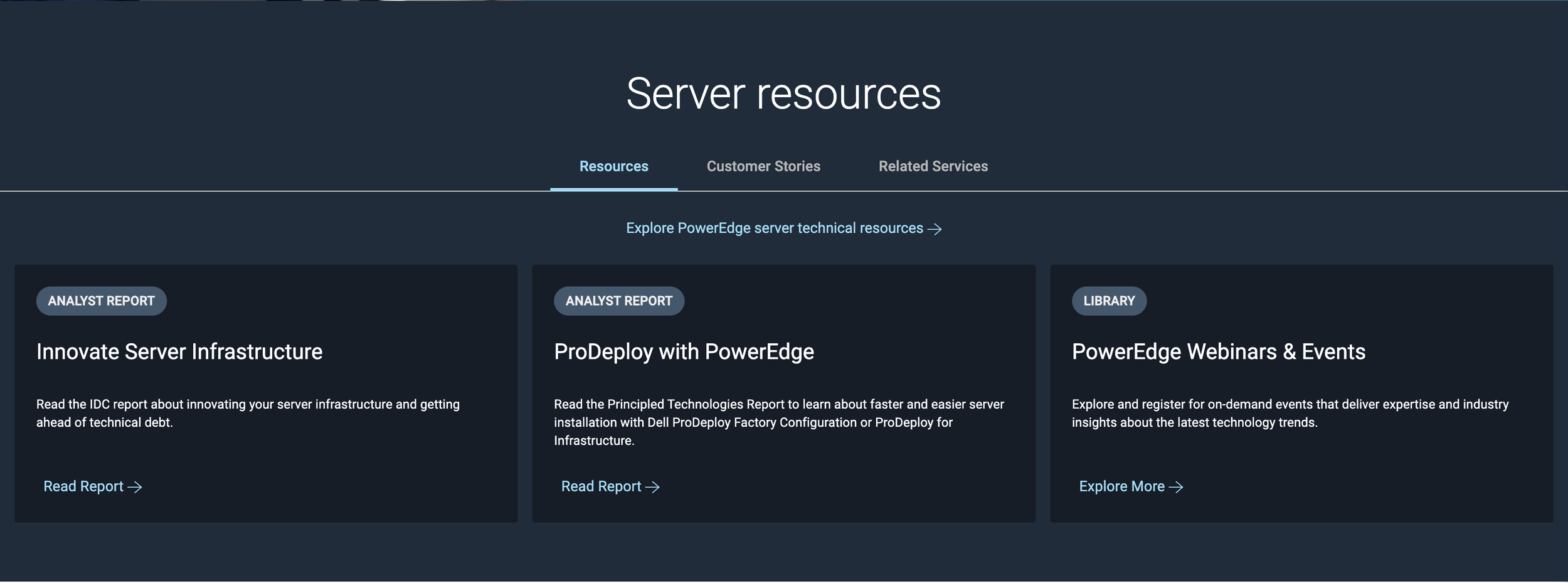
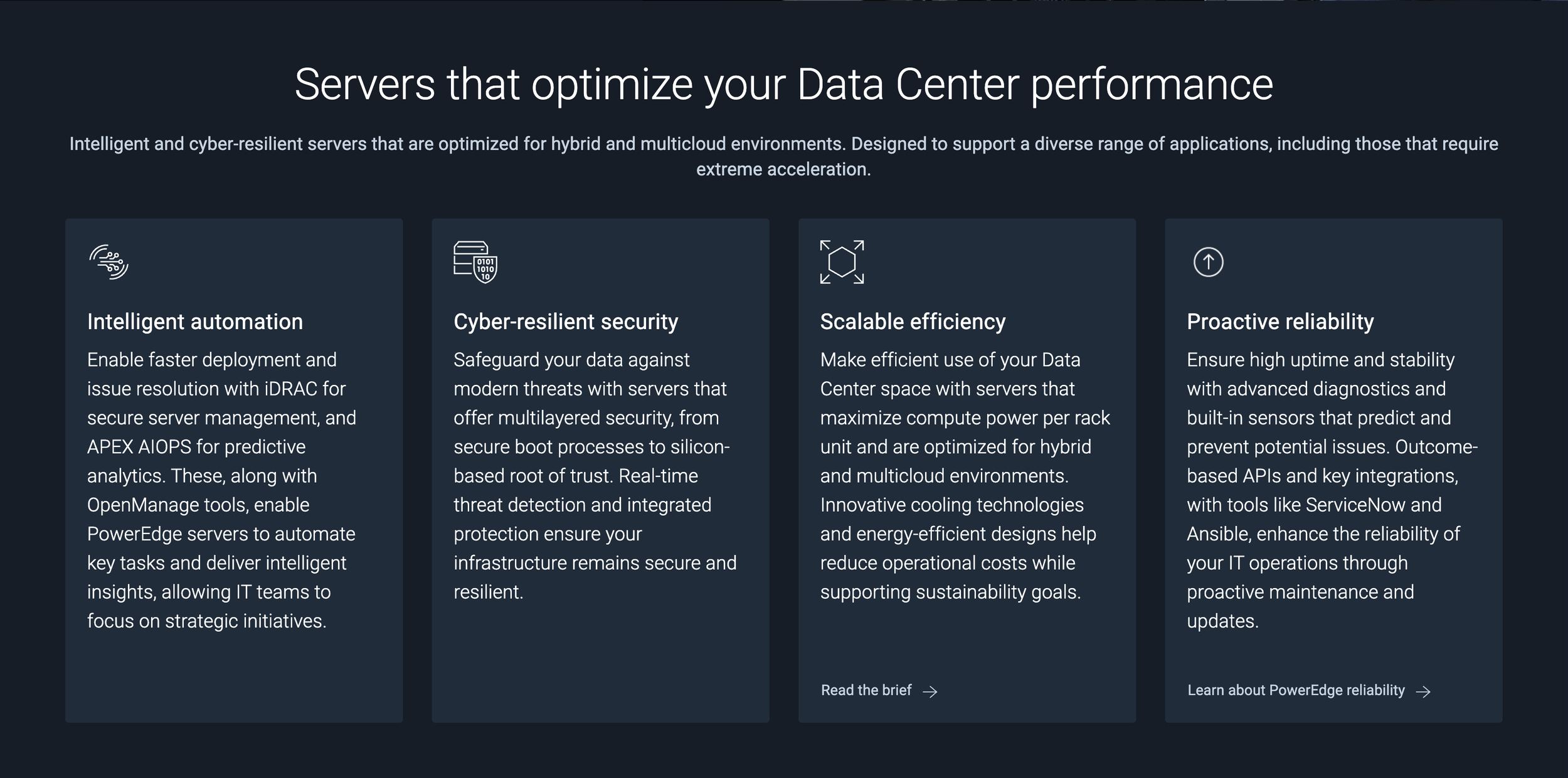
I ran discovery to identify which sections of the existing page were and weren't earning attention, then rebuilt the page module by module: restructuring information hierarchy, tightening copy blocks, and redesigning individual modules from low-fidelity wireframes through to final hi-fi specs.
I owned several of these modules end to end, iterating with engineering to keep them buildable within Dell's existing component system.
Process
Two constraints shaped the work.
First, any new pattern had to work within Dell's existing brand and technical system, so the redesign had to modernize without abandoning it.
Second, some stakeholders were resistant to changing pages that had "always worked," so part of the job was building the case for change: making the cost of the long-scroll status quo visible and showing early module concepts to build buy-in before committing to the full redesign.
Challenges
The redesign shipped, cutting scroll length by 27% while surfacing the product's key value points earlier on the page.
The project also helped kick off a broader shift: PowerEdge became one of the pages that led Dell's ISG group toward adopting dark mode across its site - which is something I'm particularly proud of.
Stakeholders who'd initially resisted the change came around once they saw it live, and several of the patterns from this redesign were later reused on other Dell product pages.
Outcome
Reflection
Looking back, this project taught me that a redesign isn't just a design problem, it's a change-management problem.
The interface work was the easier half.
The harder half was making the case for change to people who had good reasons to be cautious, and showing rather than telling them what the new version would earn back.
That's the part I now build into any redesign from the start, not just the visual work, but the argument for why it needs to happen.